
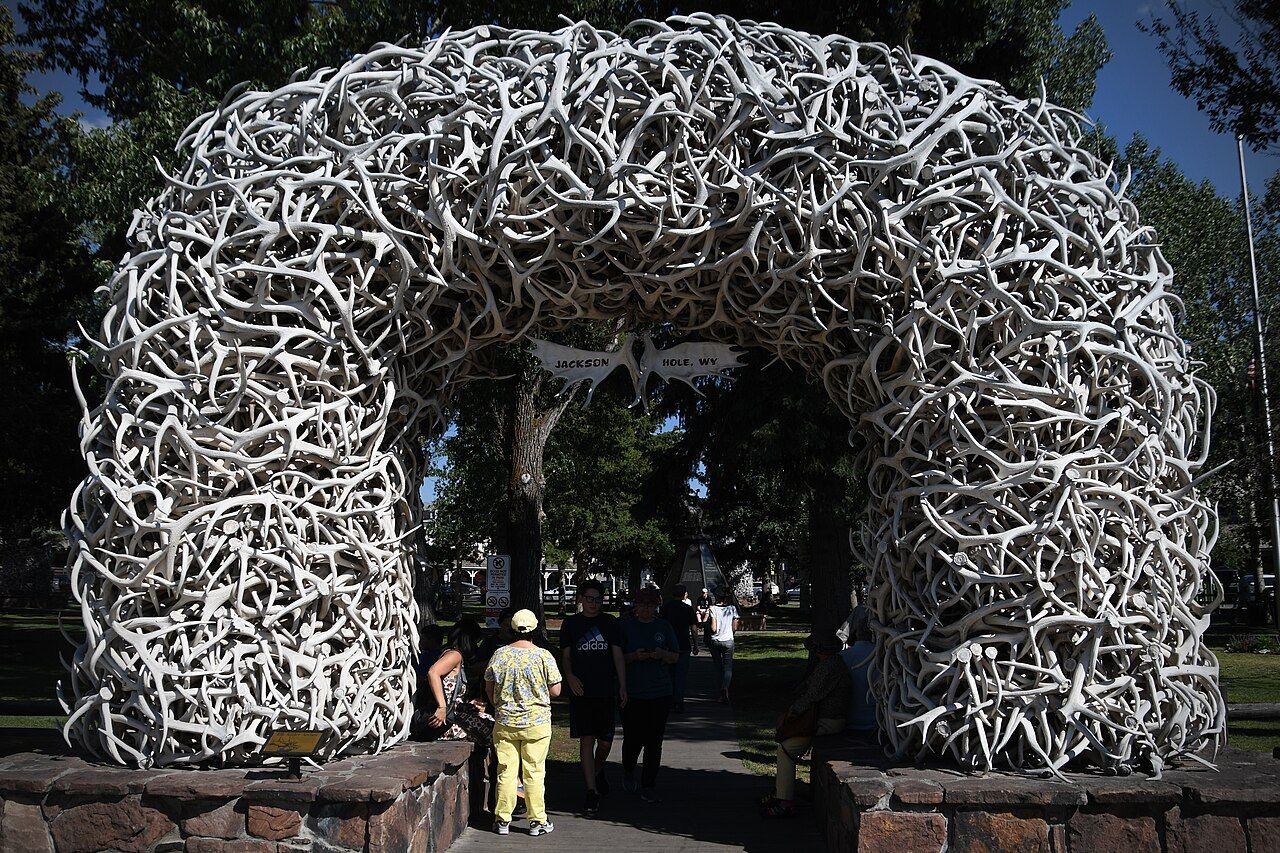
Jackson Hole is the valley; Jackson is the town. Visitors often use the two names interchangeably, but the town is a small place at the southern end of a long, mountain-ringed basin. It sits at more than 6,000 feet above sea level, squeezed between steep hills, with the National Elk Refuge spreading north from its edge. For most people who come to photograph the parks, it is the place to sleep, eat and stock up. It is also worth an hour or two with a camera in its own right.
Why it is called the Hole
The fur trappers who worked the northern Rockies in the early 19th century used the word "hole" for a high valley ringed by mountains. This one was named for David Jackson, one of the trappers who worked the region in that era. The name stuck, and the town that grew up later at the south end of the valley took the trapper's name too.
Long before the trappers, Native American peoples used the valley seasonally for hunting and gathering, travelling through the passes in summer. Homesteaders and ranchers followed the trappers in the late 19th century, and the town grew around a central square. Tourism, ranching and later skiing gradually turned it into the gateway it is today.
The town square and the antler arches
The heart of Jackson is its town square, a small park with lawns, trees and four arches made of elk antlers, one at each corner. The arches are built from thousands of antlers shed each winter by the elk that gather on the refuge just north of town. They have been rebuilt and replaced over the years as the antlers weather, and they are probably the most photographed objects in the valley that are not mountains or animals.
The antlers come from a long tradition in which shed antlers are gathered on the refuge under permit and auctioned, with proceeds going back to the refuge. You can read more about that tradition, and about the elk themselves, in our guide to elk and the refuge.
For photographs, the arches work best early in the morning, before the square fills with people, or in the evening when the light softens and the shadows lengthen. In winter, strings of lights in the trees and snow on the antlers change the mood entirely. A wide lens shows the full curve of an arch; a longer lens can pick out the tangled texture of the antlers. Be respectful of other visitors posing for pictures, and avoid climbing on the arches.
Next frameReading the light in the valleySnow King Mountain
Snow King Mountain rises steeply from the southern edge of town, so close that its ski runs come down almost to the streets. It is one of the oldest ski areas in the region, and in winter the snowy slopes above the rooftops make for evening photographs. In summer, trails lead up the face of the mountain, and a lift carries visitors to the top when it is running.
The summit gives a broad view over the town, the refuge and the length of the valley towards the Tetons. Sunset can be especially striking, with the range in silhouette and the valley glowing below. The climb on foot is short but steep, and the trail can be crowded.
The National Museum of Wildlife Art
A short drive north of town, the National Museum of Wildlife Art sits on a hillside overlooking the National Elk Refuge. The building is made of rough local stone and set low into the slope so that it blends with the hillside, and from a distance it looks almost like an outcrop of rock.
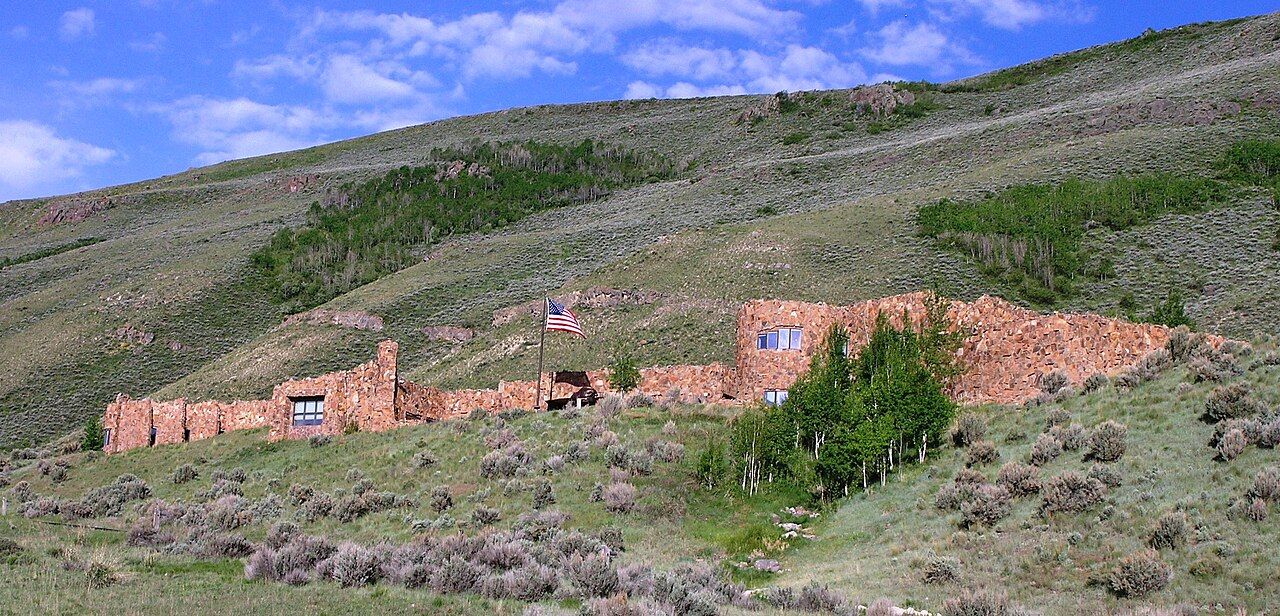
frame info
Daniel Mayer · CC BY-SA 3.0Inside, the collection covers wildlife art from many periods and places, with a strong focus on North American animals. An outdoor sculpture trail winds across the hillside with views over the refuge, and large bronze animals appear among the sagebrush. For wildlife photographers, the galleries are a chance to see how painters and sculptors have composed the same animals you are trying to photograph, which can be a fresh source of ideas.
In winter, the view from the museum terrace across the refuge can include large herds of elk on the snow below, and bighorn sheep sometimes feed on the slopes nearby.
Using Jackson as a base
From town, it is a short drive north to the southern entrance of Grand Teton National Park and the first big views of the range. Mormon Row and the Gros Ventre River are within easy reach for sunrise, and the drive to Yellowstone's southern entrance takes a couple of hours or more. In winter, the main highway through the valley stays open, while many park roads close to cars.
Jackson is busy in summer and during the ski season, and quieter in the shoulder seasons of spring and late autumn. Accommodation and services cost more than in many other western towns, and availability can be tight in peak months, so plan ahead. Weather in town is often milder than in the open valley, but evenings can be cold in any season.
Photographing the town
Beyond the arches and the mountain, the town has other details worth noticing: wooden boardwalks along the streets, old western storefronts and signs, and views of the hills rising above the rooftops. Respect people's privacy, especially when photographing in busy streets, and avoid making any business or brand the main subject if you plan to share images widely.
Moose and mule deer sometimes wander into neighbourhoods in winter, and elk graze on the hillsides above town. Give them the same distance you would in the parks; town rules and common sense both apply. For the habits that keep animals and people safe, read wildlife photography ethics.
Jackson is not the reason most photographers come to the valley, but it is where every trip begins and ends. Take a little time to look around before heading back out to the mountains.