
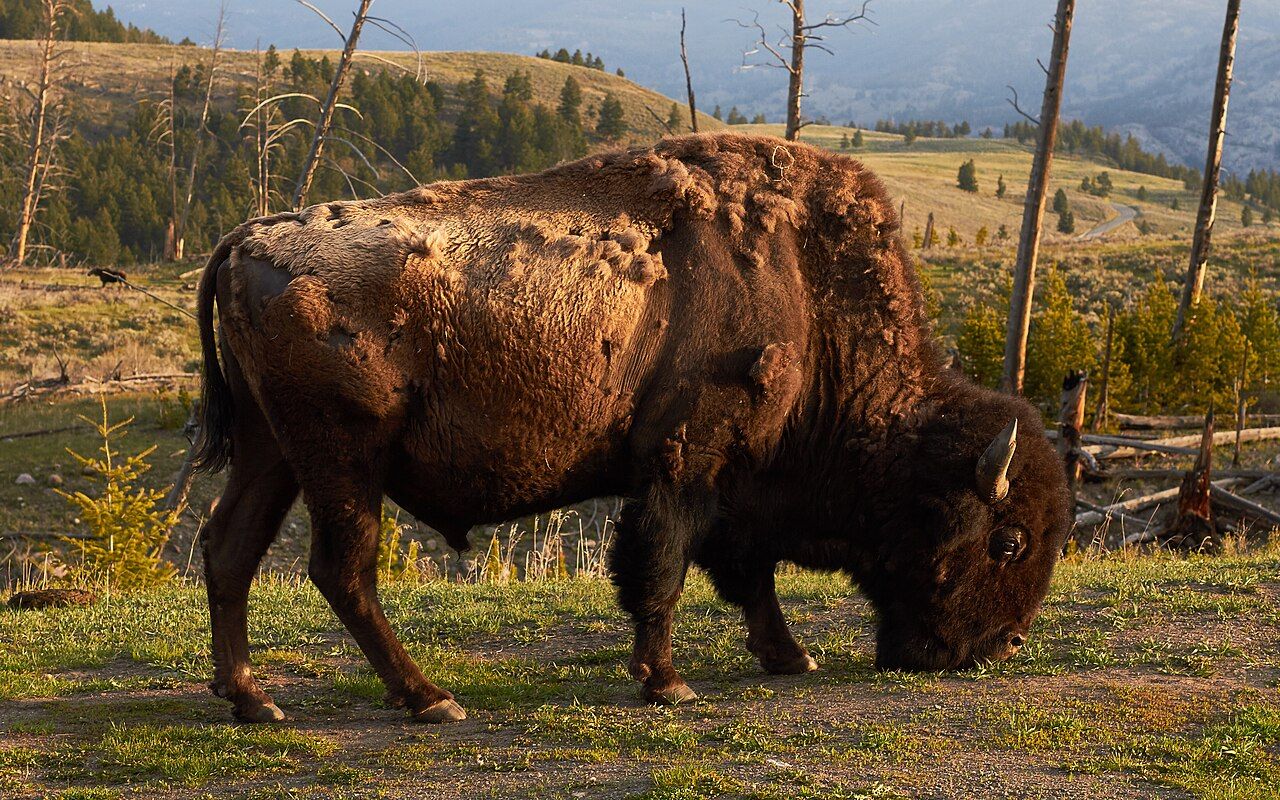
Jackson Hole and Yellowstone are among the easiest places in the world to see large wild animals. Bison, elk, moose, bears, wolves and pronghorn live alongside roads used by millions of visitors a year. That access is a gift and a risk. Each photographer who walks too close, stops in the road or lures an animal for a shot makes life a little harder for the wildlife and the next visitor. The good news is that the habits of ethical photography are simple, and they usually lead to better photographs too.
Distance comes first
The parks set clear minimum distances. Stay at least 100 yards from bears and wolves, and at least 25 yards from all other wildlife, including bison, elk, moose, deer and pronghorn. These are minimums. If an animal changes its behaviour because of you, by stopping feeding, staring, moving away or moving towards you, you are too close, whatever the distance.
Some practical ways to judge distance:
- 100 yards is about the length of a football field. 25 yards is about two bus lengths.
- Hold your arm out and raise your thumb. If you cannot cover the animal with your thumb, you may be too close.
- When an animal walks towards you, it is your job to back away and keep the gap.
Remember that animals can move fast. Bison, moose and elk injure more people in the parks than bears do, and in almost every case the person had moved too close. For the details on specific animals, see our guide to bison and our guide to bears.
Let the lens do the work
A long lens is the most important ethical tool you can carry. With a focal length of 400mm or more, you can fill the frame with large animals from legal distances. With a teleconverter or a crop-sensor camera, you can reach further still. Binoculars and a spotting scope help you find animals and watch behaviour without approaching.
Your vehicle is the other great tool. Many animals tolerate cars much more readily than people on foot, and a car gives you shelter and support. Use a beanbag or window mount for stability, switch off the engine to stop vibration, and stay inside when animals are near the road.
A wider frame showing an animal in its habitat is often stronger than a tight portrait. If you cannot get close enough for the shot you had in mind, look for a different one: animals in the landscape, silhouettes, tracks, or behaviour seen through the scope.
Never bait, call or feed
Feeding wildlife in the parks is illegal, and that includes leaving food out to attract animals for a photograph. Animals that learn to associate people with food become bold, get hit by cars, or have to be removed. Baiting with food, scent lures or live prey is never acceptable.
The same goes for sounds. Do not use calls, apps or recordings to imitate elk bugles, wolf howls, birdsong or prey in distress. Calling draws animals towards roads and people, disrupts breeding and feeding, and stresses wildlife at times when they can least afford it. Whistling, clapping or shouting to make an animal look up is also out. Wait for the moment instead.
Drones are banned in national parks, including Grand Teton and Yellowstone. Their noise and movement can panic wildlife, and they intrude on other visitors' experiences.
Next frameWolves on the northern rangeRoadside habits
Most wildlife photography in these parks happens next to roads. Traffic, crowds and animals are a dangerous mix. Follow a few basic habits:
- Pull completely off the road, with all four wheels outside the travel lane, before you stop.
- Never stop in the road, even briefly, and never block traffic or another vehicle.
- Stay near your vehicle so you can get back in quickly if an animal moves.
- Do not cross the road towards an animal, and do not walk between animals and the cover they are heading for.
- Follow the instructions of rangers and wildlife staff at once, even if it means leaving.
At a wildlife jam, keep your voice low, give other photographers room and resist the temptation to push forward. If the scene becomes chaotic, the best thing you can do is leave.
Thermal areas and fragile ground
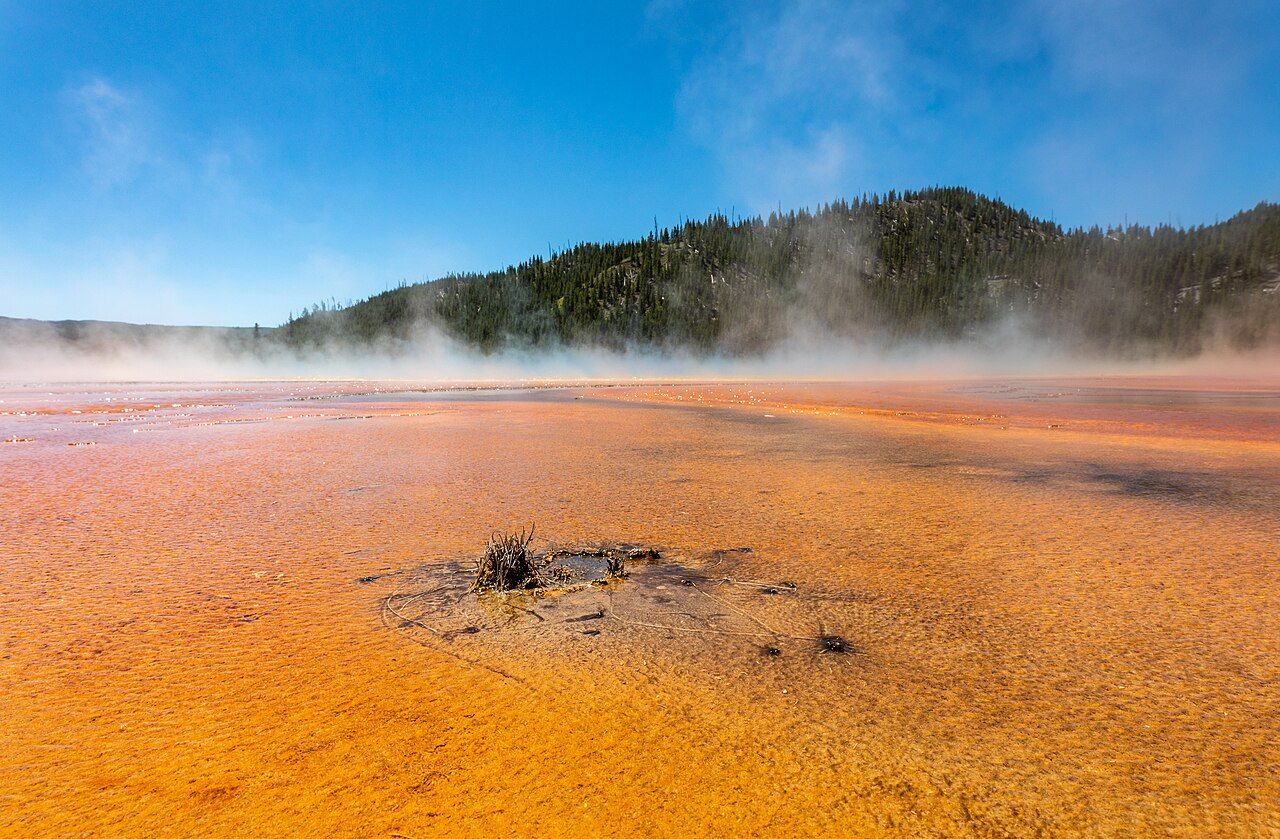
Ethics apply to landscapes as well as animals. In Yellowstone's geyser basins, the crust beside hot springs can be thin over scalding water, and the colourful microbial mats are easily damaged. Stay on boardwalks and marked trails at all times, keep tripod legs on the boards, and never throw anything into a spring. The same applies to fragile meadows, wetlands and riverbanks in Grand Teton: use existing paths, avoid trampling flowers, and do not move or remove natural objects.
frame info
Dietmar Rabich · CC BY-SA 4.0Sharing locations with care
Social media can turn a quiet sighting into a crowd within hours. That pressure falls hardest on sensitive animals: dens, nesting birds, owls on a day roost, and animals in winter when every bit of energy counts. Before you post:
- Think twice about naming exact locations for dens, nests, roosts or other sensitive sites.
- Remove location data from images of sensitive animals, or post them well after the event.
- Do not share locations of animals that are being managed by park staff or are in closed areas.
- Be honest about captions. If a photograph was made at a game farm or with a guide, say so.
Bears and wolves can be killed when they cross out of the parks, and habituated animals are sometimes removed. Discretion protects them. For more about wolves and their status outside the parks, read our notes on wolves.
Ethical photography is ultimately about attitude. Put the animal first, follow the rules even when nobody is watching, and accept that sometimes the right choice is to put the camera down and simply watch.
End of the roll. Back to the light meter.