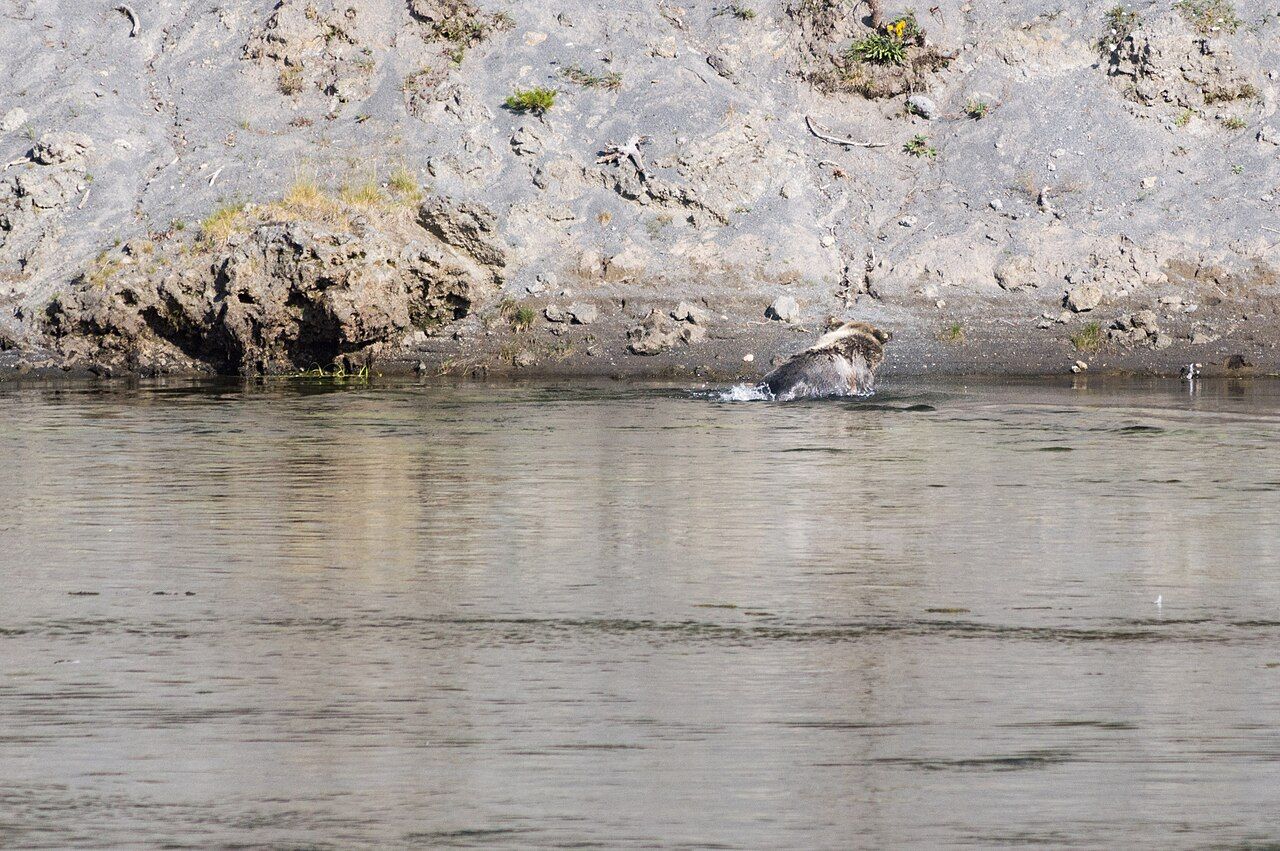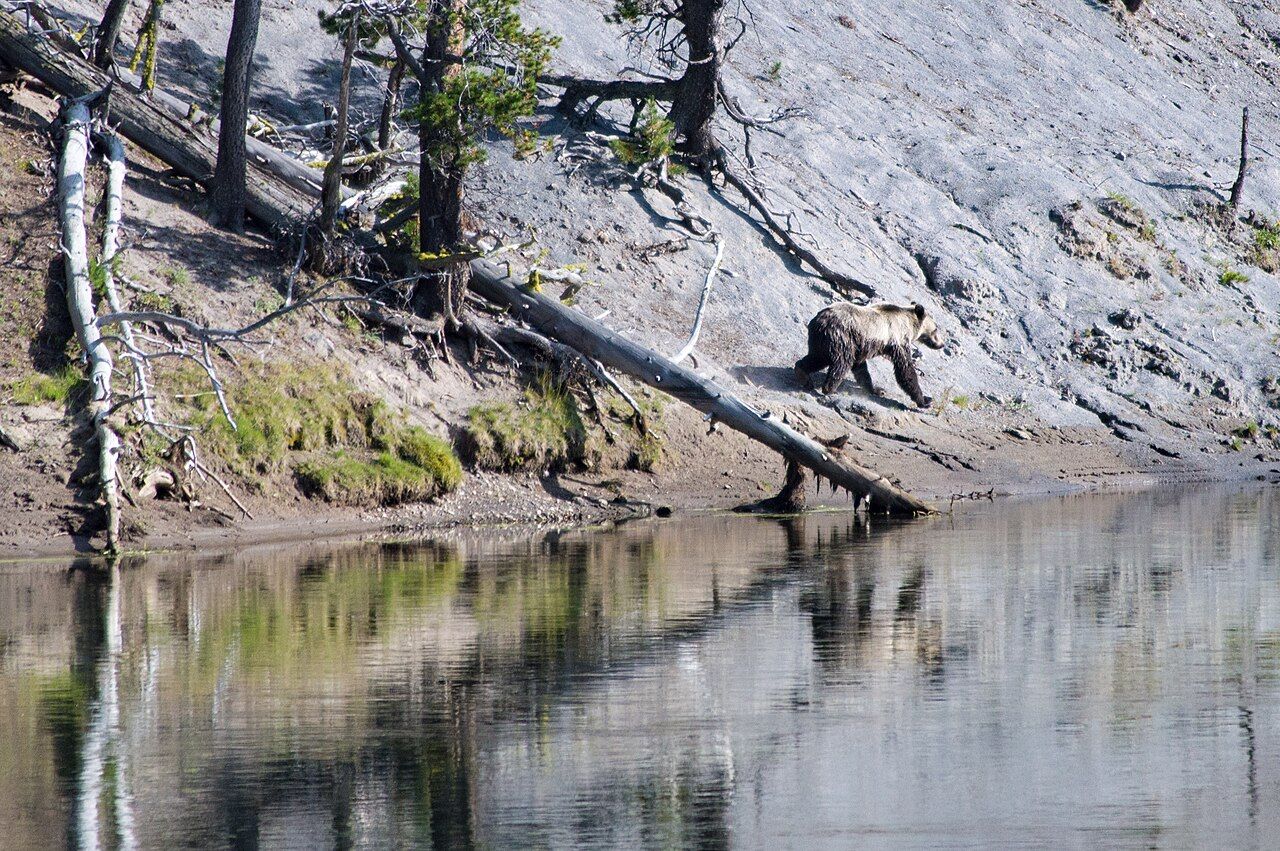
Few sights stop traffic in Jackson Hole like a bear. One appears at the edge of a meadow, and within minutes there are cars on both shoulders, people on foot, and lenses pointing into the trees. Grand Teton and Yellowstone are among the best places in the lower 48 states to see both grizzly and black bears in the wild, and that fortune comes with responsibility. A bear that learns to tolerate crowds, or worse, to associate people with food, rarely ends well.
This guide covers how to tell the two species apart, what the distance rules mean in practice, how to carry and think about bear spray, and how to photograph bears without becoming part of the problem.
Telling a grizzly from a black bear
Colour is the least reliable clue. Black bears can be black, brown, cinnamon or blond. Grizzlies range from pale straw to almost black, often with silvery tips to the fur that give them their grizzled look. Size helps a little, since adult grizzlies are usually larger, but a young grizzly and a big black bear can look much alike at a distance. Look at shape instead:
| Feature | Grizzly bear | Black bear |
|---|---|---|
| Shoulders | A distinct muscular hump above the shoulders | No hump; the back line is fairly level or highest at the rump |
| Face profile | Dished, with a concave line between eyes and nose | Straight, often with a longer, more pointed muzzle |
| Ears | Short and rounded | Taller and more pointed |
| Front claws | Long, light-coloured, often visible | Shorter, darker and curved for climbing |
No single feature is decisive. Bears change shape as they turn, sit or walk, and a bear in thick summer fur can confuse anyone. Look for several clues together, and when in doubt, treat the animal as a grizzly.
frame info
Supercarwaar · CC BY-SA 4.0Distance, bear spray and safety
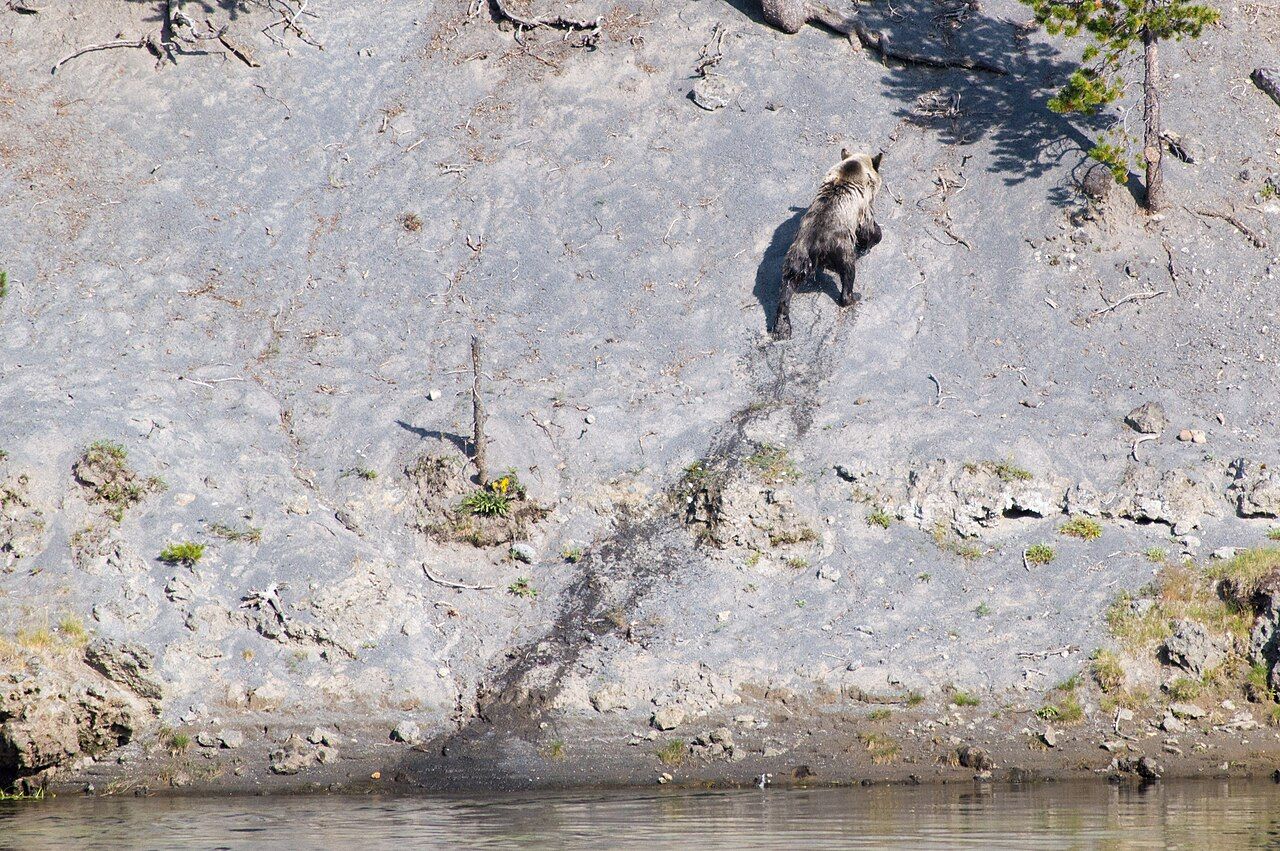
In Yellowstone and Grand Teton, the rule is to stay at least 100 yards from bears and wolves. That is the length of a football field, and it applies whether you are on foot, at a pullout or in a crowd. If a bear moves towards you, it is your job to move away and keep the gap. Rangers may set larger closures around feeding bears, carcasses or dens; follow them.
Bear spray is a pressurised deterrent designed to stop a charging bear, and it is widely recommended for anyone walking in bear country, including short trails near the road. It works only if you can reach it quickly, so carry it on your belt or chest, not buried in a pack. Learn how the safety clip works before you need it, check the expiry date, and remember that it cannot be carried on aircraft.
On trails, the basics reduce your chances of a surprise encounter:
- Hike in groups and make noise, especially near streams, in thick brush and on blind corners.
- Avoid hiking at dawn, dusk and after dark in areas of known bear activity.
- If you see a bear at a distance, give it a wide berth or turn back.
- Never run from a bear. Stand your ground, stay calm, keep your spray ready and back away slowly when the bear is not approaching.
- Leave any carcass you find, and the area around it, immediately.
frame info
Supercarwaar · CC BY-SA 4.0Spring emergence and the year of a bear
Bears spend much of the winter in dens. In Jackson Hole and Yellowstone, males usually emerge first, from around March, and females with newborn cubs leave the den later in spring. Hungry bears coming out of hibernation look for winter-killed carcasses, new green grass and roots, and in some areas they hunt newborn elk calves in late spring.
Spring is the season many wildlife watchers come for bears, because animals are often feeding in open meadows and along roadsides where green-up comes first. Through summer, bears follow food as it ripens, moving into higher country, and in autumn they gorge on berries and other foods to build fat before denning again. In parts of the region, grizzlies in autumn are drawn to carcasses left by hunters outside the parks, which brings its own risks.
Numbers and patterns change every year with weather and food. Grizzlies in the Greater Yellowstone area recovered from low numbers in the 20th century and are still protected under federal law, while black bears are common in forested areas across the region.
Next frameWolves on the northern range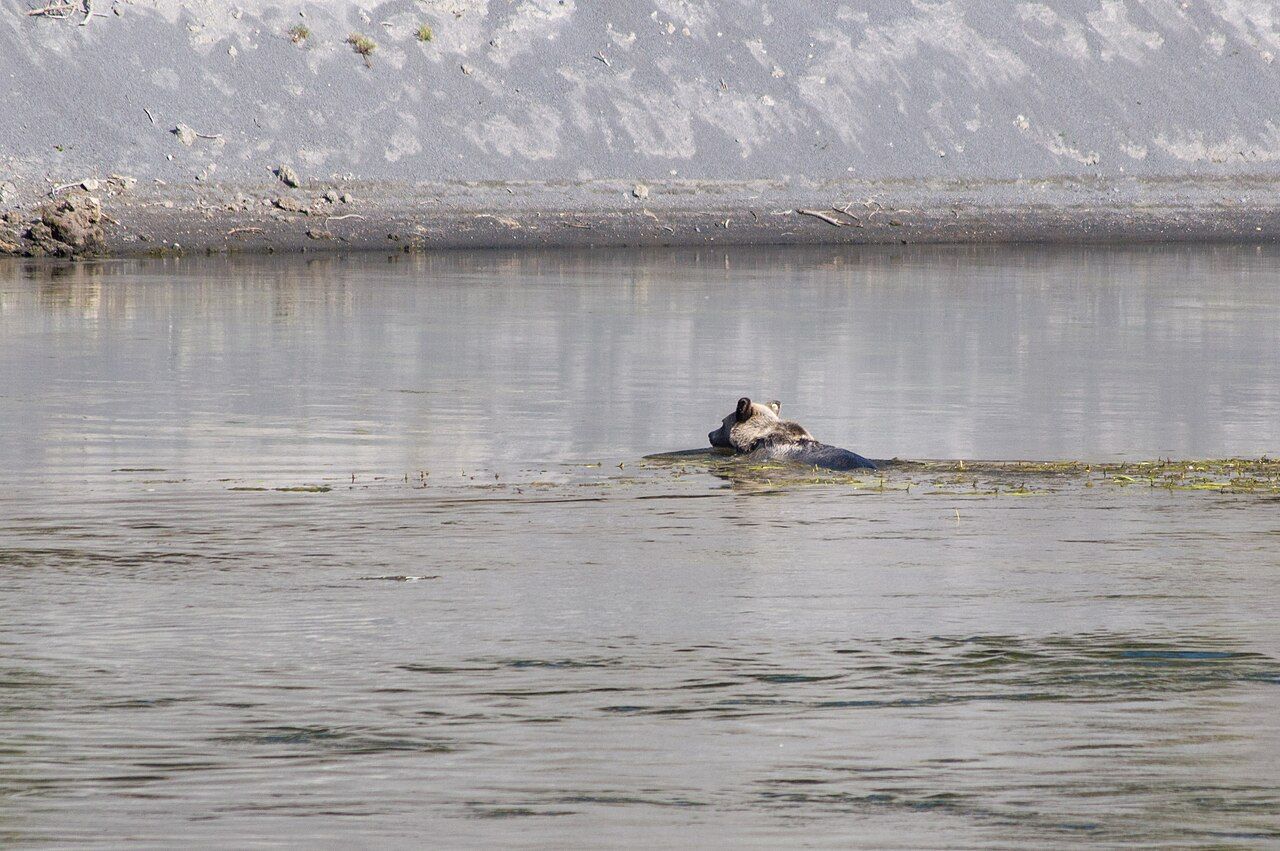
frame info
Supercarwaar · CC BY-SA 4.0Bear jams and roadside bears
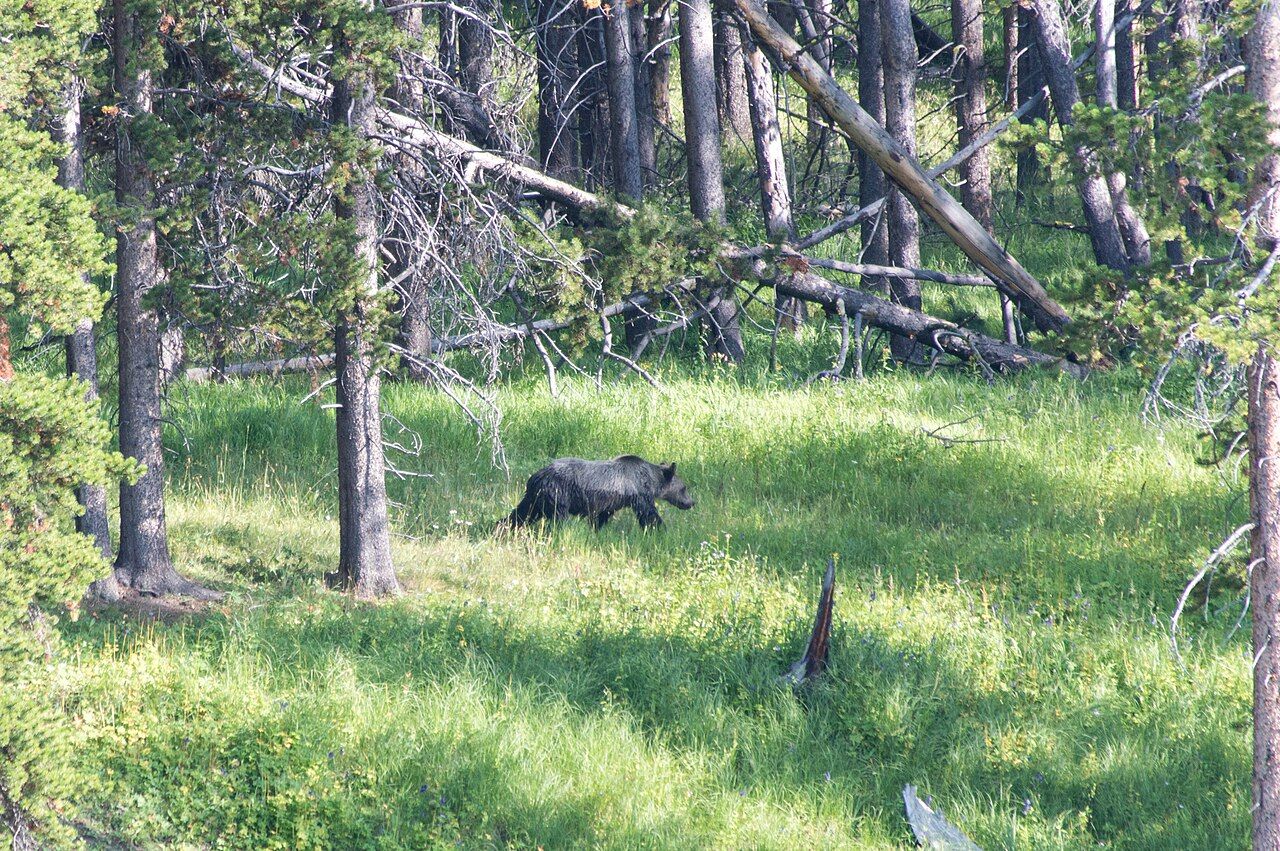
Some bears in Grand Teton and Yellowstone spend much of their lives within sight of the road, and a few well-known roadside bears, often mothers with cubs, have become famous with visitors and photographers over the years. Their fame is a double-edged thing. The crowds they draw create bear jams, where cars stop on the road, people spill out on foot, and bears are hemmed in between vehicles. Both parks now send teams of staff and volunteers to manage traffic and crowds around roadside bears.
If you come across a bear jam:
- Slow down and only stop if you can pull completely off the road in a legal pullout.
- Stay in your vehicle if the bear is close to the road. A car is a good blind.
- Never stop in a travel lane, block the road or leave your door open.
- Follow the instructions of park staff without argument, even if it means losing the shot.
- If staff ask you to move on, do it, and look for the next bear another day.
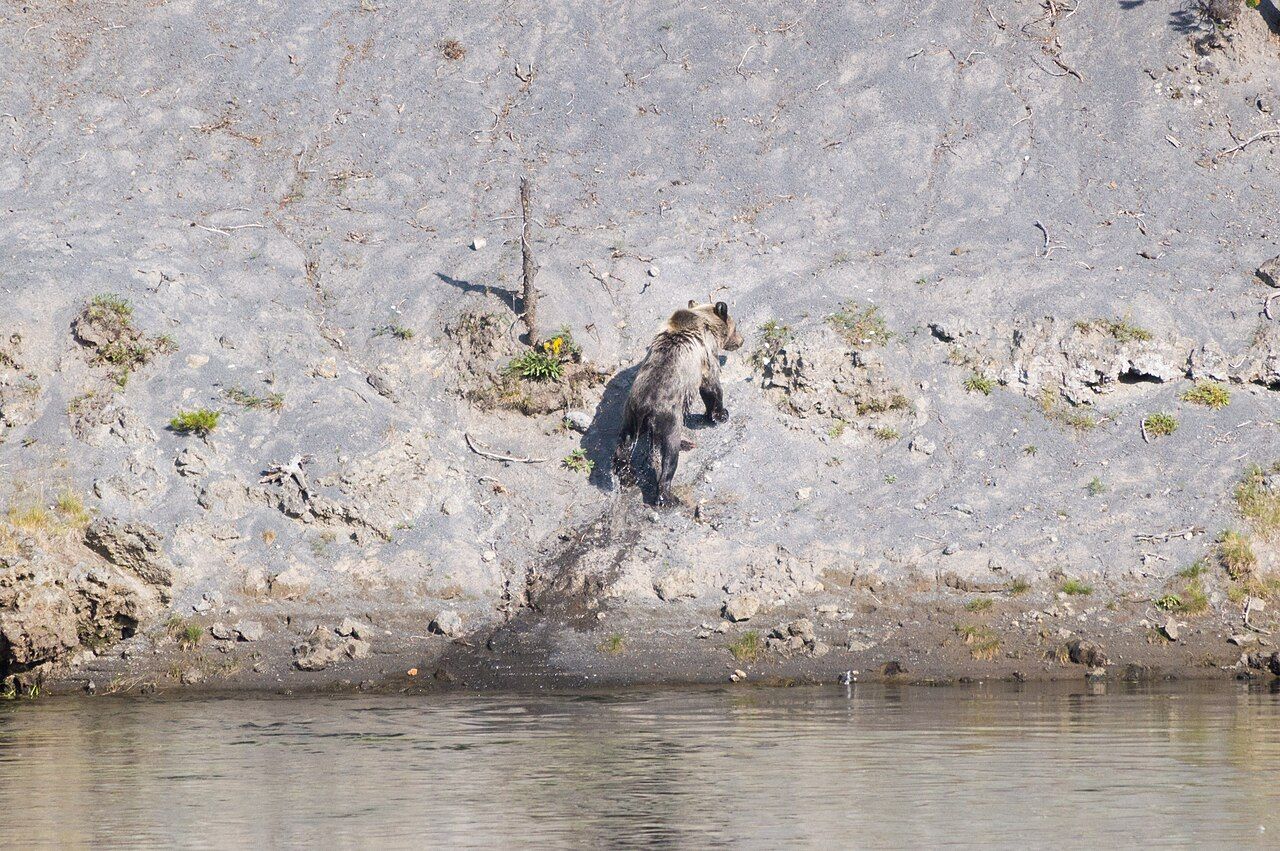
A bear that learns to tolerate crowds, or worse, to associate people with food, rarely ends well. Bears that become too comfortable near roads or campgrounds are sometimes moved or, in the worst cases, killed. The best thing you can do for them is give them space, keep your visit short and quiet, and leave when they move off.
frame info
Supercarwaar · CC BY-SA 4.0Food storage and campsites
A fed bear is a dead bear, as rangers often put it. Every scrap of food, rubbish or scented item left within reach teaches bears that people mean easy calories. Both parks have food storage rules for campgrounds, picnic areas and the backcountry, and they apply to cooler boxes, pet food, toiletries and anything else with a smell.
- Use the metal food storage boxes provided at campsites, or keep food in a hard-sided vehicle with the windows closed where that is allowed.
- Never leave food, coolers or rubbish unattended, even for a few minutes.
- In the backcountry, follow the parks' rules for approved containers or hanging food.
- Pack out all rubbish and use bear-resistant bins.
Photographing bears well
The 100-yard rule means a long lens is essential. A 500mm or 600mm lens, or a long zoom on a crop-sensor body, puts a bear at a reasonable size from a legal distance, especially if the animal is broadside. Support it with a beanbag on the window sill or a tripod at a pullout. Fast shutter speeds help with moving bears, and dawn light often coincides with bears feeding in the open.
Some of the strongest bear images include the setting: a bear crossing a wide meadow, swimming a river, or framed against water and trees. You do not need a tight portrait to make a good photograph, and wider frames are easier to make from a responsible distance. Never use calls, food or noise to make a bear look up or move. Do not follow a bear into the trees for one more frame.
When bears are around, the rest of the wildlife community reacts too. Ravens, coyotes and sometimes wolves gather at carcasses, and other animals may move away. Valleys such as Hayden Valley and the Lamar Valley are known for grizzlies working carcasses at a distance, best watched through a spotting scope. In Grand Teton, roads in the north of the park, including the area around Oxbow Bend, are often good for bear sightings.
For more on keeping your distance and being a good member of the roadside crowd, read wildlife photography ethics. Respect the space, carry spray, and let the bear decide how close the encounter will be.