
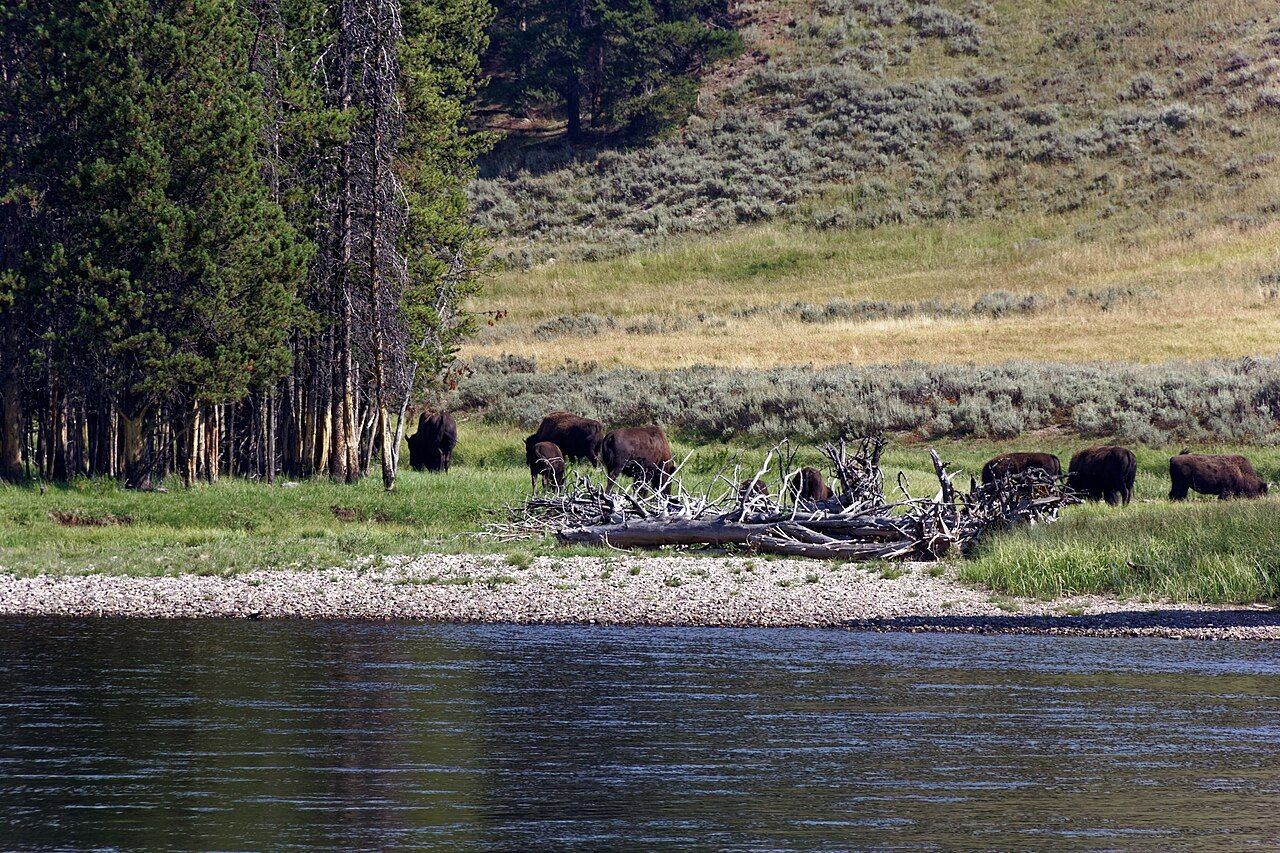
Hayden Valley opens out along the Yellowstone River in the centre of Yellowstone National Park, between Canyon Village to the north and the area around Yellowstone Lake to the south. The road follows the river through rolling grassland and sagebrush with hardly a tree in sight. It is one of the best places in the park to see bison in large numbers, and in late summer, when the rut is underway, it is one of the loudest.
Why there are so few trees
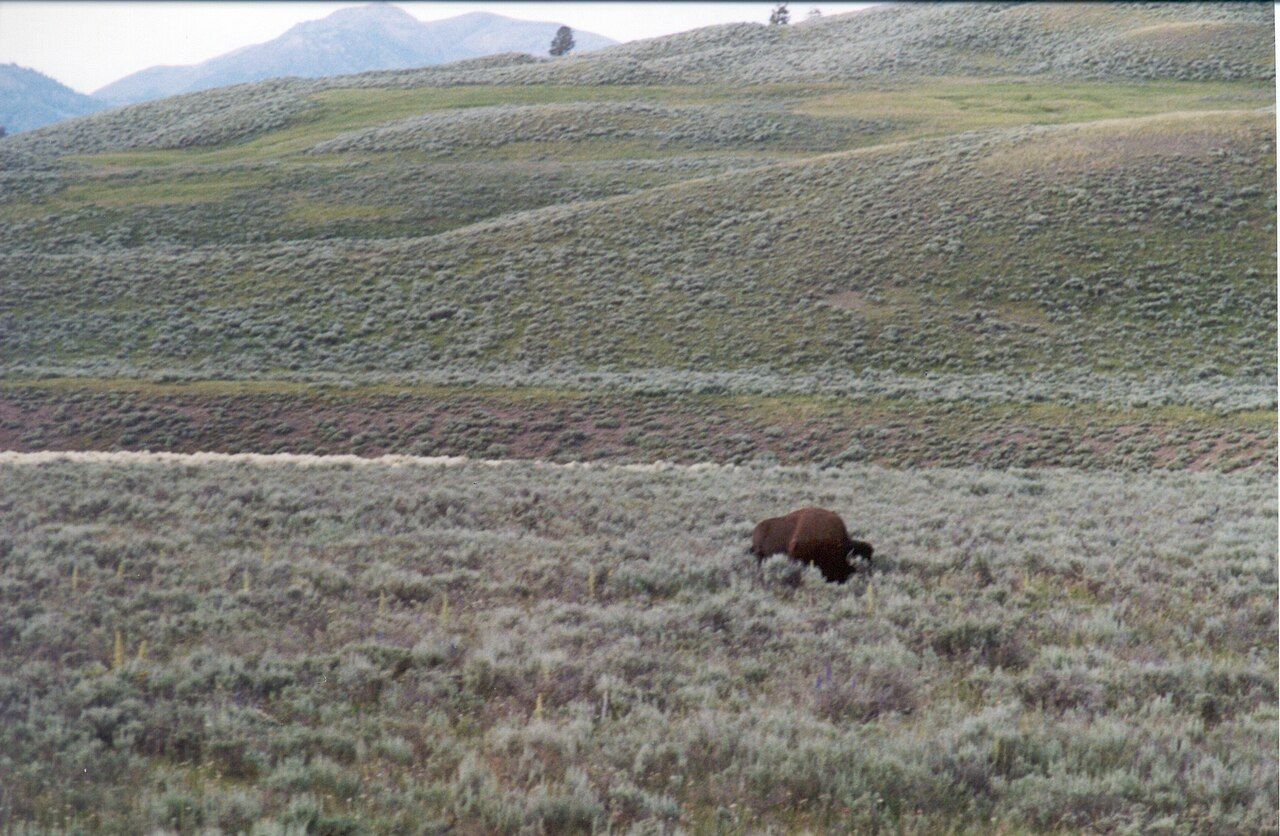
The valley floor was once covered by an arm of Yellowstone Lake. When the water retreated, it left fine silt and clay on top of glacial deposits, and those soils hold water in a way that favours grasses and sedges over trees. The result is wide, open country with long sight lines, which suits grazing animals and the people who come to watch them.
The Yellowstone River flows slowly through the valley here, with broad bends, marshy edges and gravel bars. On cool mornings, fog often lies along the water and drifts across the meadows, and the low sun turns it gold.
The bison rut
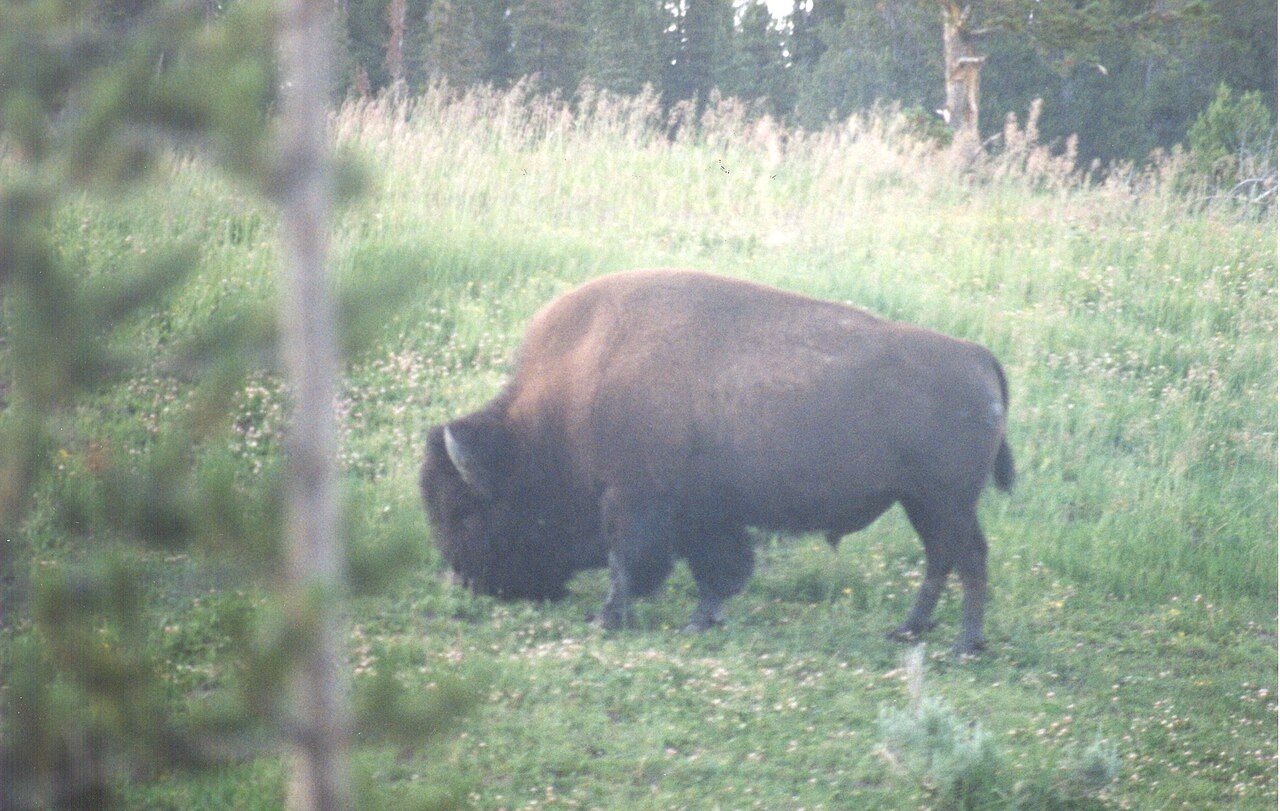
From mid-summer, usually peaking in late July and August, bison gather in large herds for the mating season. Bulls that spent the year apart rejoin the cows and calves, and the valley fills with sound: a deep, rolling bellow that carries for miles. Bulls follow cows closely, wallow in dust to spread their scent, posture side by side and sometimes clash head-on.
frame info
Chris Light · CC BY-SA 4.0It is a spectacular time to watch, but a dangerous one to be careless. Rutting bulls are irritable and can charge without much warning. Park rules require you to stay at least 25 yards from bison, and during the rut more distance is wiser. Signs of agitation include a raised tail, pawing, head shaking and snorting. Our page on bison explains these warning signs and the animal's history.
Grizzlies and other wildlife
Hayden Valley is also good grizzly country. In spring, bears come out of their dens and search the valley for animals that died over the winter, and a carcass can hold a bear in one area for days. Later in the season, bears dig for roots and rodents in the meadows. Sightings draw crowds quickly.
If you see a bear, stay at least 100 yards away, which is the rule for bears and wolves. Do not walk toward a carcass, even if no bear is visible: a bear may be resting nearby, and it will defend its food. Rangers sometimes close areas near carcasses, and those closures must be respected. Our page on grizzly and black bears covers safety in more detail.
Next frameOld Faithful and the Upper Geyser BasinWolves pass through the valley at times, and coyotes are common. The river and marshes attract trumpeter swans, American white pelicans, Canada geese, ducks and sandhill cranes. Bald eagles and ospreys fish along the river. Elk graze the edges, especially in the early morning. Binoculars let you scan the far slopes without leaving the pullout.
Traffic and jams
The road through Hayden Valley is famous for wildlife jams. When bison cross the road, or a bear appears on a distant slope, traffic can stop for a long time. Herds sometimes walk right down the road, surrounding vehicles.
- Stay in your vehicle when bison are on or near the road. Let them pass.
- Do not honk or try to push through a herd.
- Pull completely off the road to watch, and only where there is room.
- Never stop in the traffic lane or walk into the road to photograph.
Roads through the valley close to regular cars in winter, along with most of the park's interior roads.
Light and photography
The best light comes early. At sunrise, the valley often holds fog along the river and backlit mist across the meadows, and the bison appear as dark shapes in the haze. As the sun rises, the fog lifts and the warm, low light shows detail in the animals' coats. By mid-morning, the light flattens, and heat haze can soften distant subjects.
frame info
Chris Light · CC BY-SA 4.0- A long lens is the main tool here, for wildlife at a safe distance.
- A moderate telephoto works well for herds in their landscape, showing the river and hills.
- Shoot from the pullouts and use your vehicle as a blind when animals are close.
- Look for dust from wallows backlit by the low sun, and steam rising from animals on cold mornings.
Evening is also good, when the light warms again and the bison become more active. In late summer, sunset over the valley can be long and colourful, especially if there is a little haze in the air.
Nearby stops
North of the valley, the river drops into the Grand Canyon of the Yellowstone, with its waterfalls and coloured walls. To the south lie the Mud Volcano area and the shore of Yellowstone Lake. If you want another great wildlife valley, the Lamar Valley in the northeast is a longer drive but well worth it.
Never feed wildlife, never use calls or bait, and remember that drones are banned in the park. Rules, roads and closures change, so confirm it with the park's current notices first.