
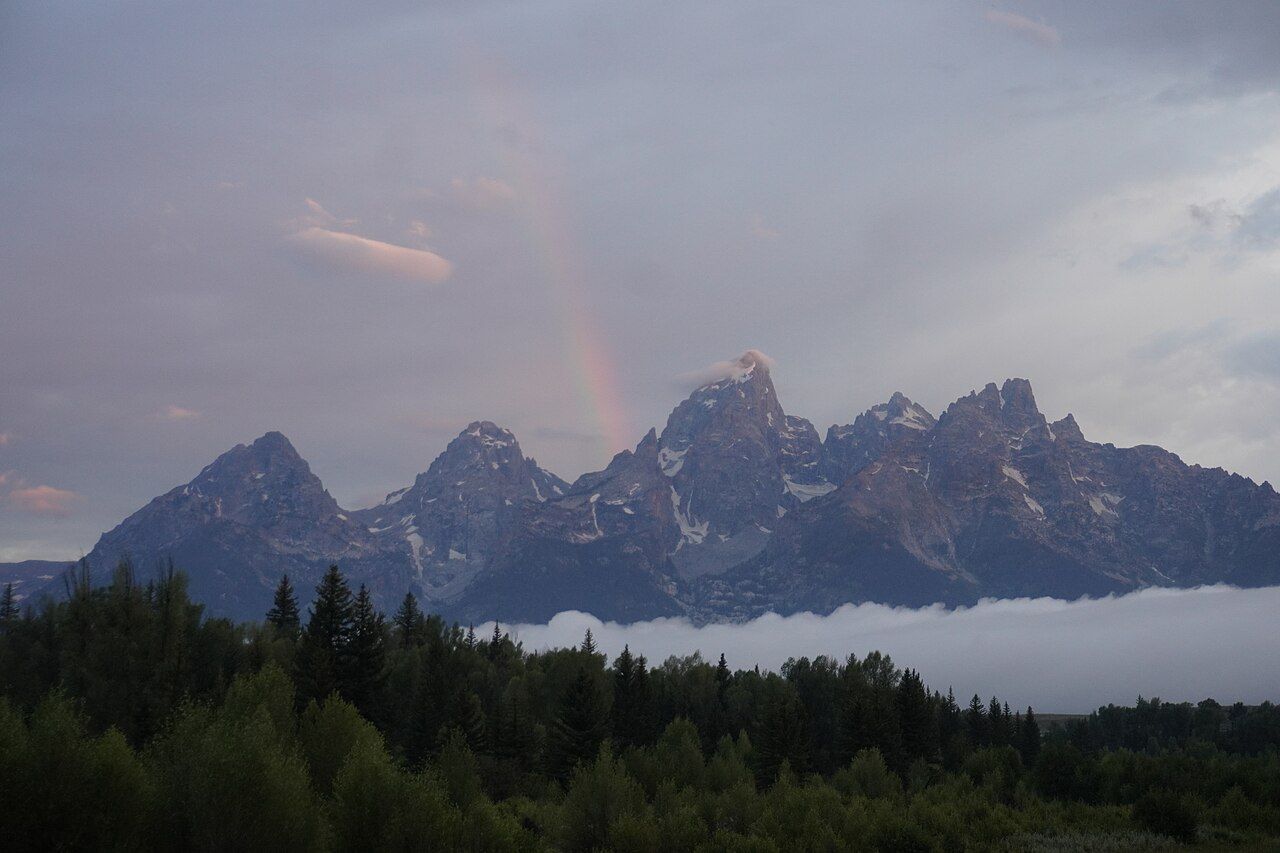

Schwabacher Landing is an old river access point on a side channel of the Snake River, a short drive north of Moose on the main highway through Grand Teton National Park. A gravel road drops from the sagebrush bench to the cottonwoods along the water, and from the parking area a flat path follows the channel upstream. Beavers have dammed parts of it, creating a series of still ponds, and on a calm morning those ponds hold an almost perfect reflection of the range.
Why the reflection works here
Most of the Teton views from the valley floor look across sagebrush or wide river. Schwabacher is different because the water sits low and close, and the beaver dams hold it still in pools that line up nicely with the peaks. The Grand Teton and its neighbouring peaks rise above the far bank, with conifers and willows in between. The ponds are small enough that a slight breeze ruffles them, but when the air is calm, the mirror is complete.
Beavers keep the place changing. Dams are built, abandoned and breached, and a pond that held a perfect reflection one year can be a muddy channel the next. Do not expect the exact frame you saw elsewhere; walk the path and find the pond that is working on the day.
The short walk
From the end of the gravel road, the main path follows the west bank of the channel upstream. It is level and easy, and the first good ponds are only a few minutes from the parking area. Further along, the crowds thin, the views shift, and you can find quieter water with willows in the foreground.
- The ground near the water can be wet and soft in early summer. Waterproof boots help.
- Mosquitoes can be heavy in June and July, especially at dawn.
- Stay on established paths. The banks are fragile and beaver dams should not be walked on.
The gravel access road is typically closed to cars in winter. Seasonal dates vary from year to year, so confirm it with the park's current notices first.
Calm mornings and timing
The range faces east, so sunrise is the time to be here. The peaks catch pink and orange light first, and if the air is still, that colour doubles in the ponds below. Wind tends to rise as the sun warms the valley, so the first half hour of light is usually the best chance at a clean mirror.
frame info
GrandTetonNPS · Public domain
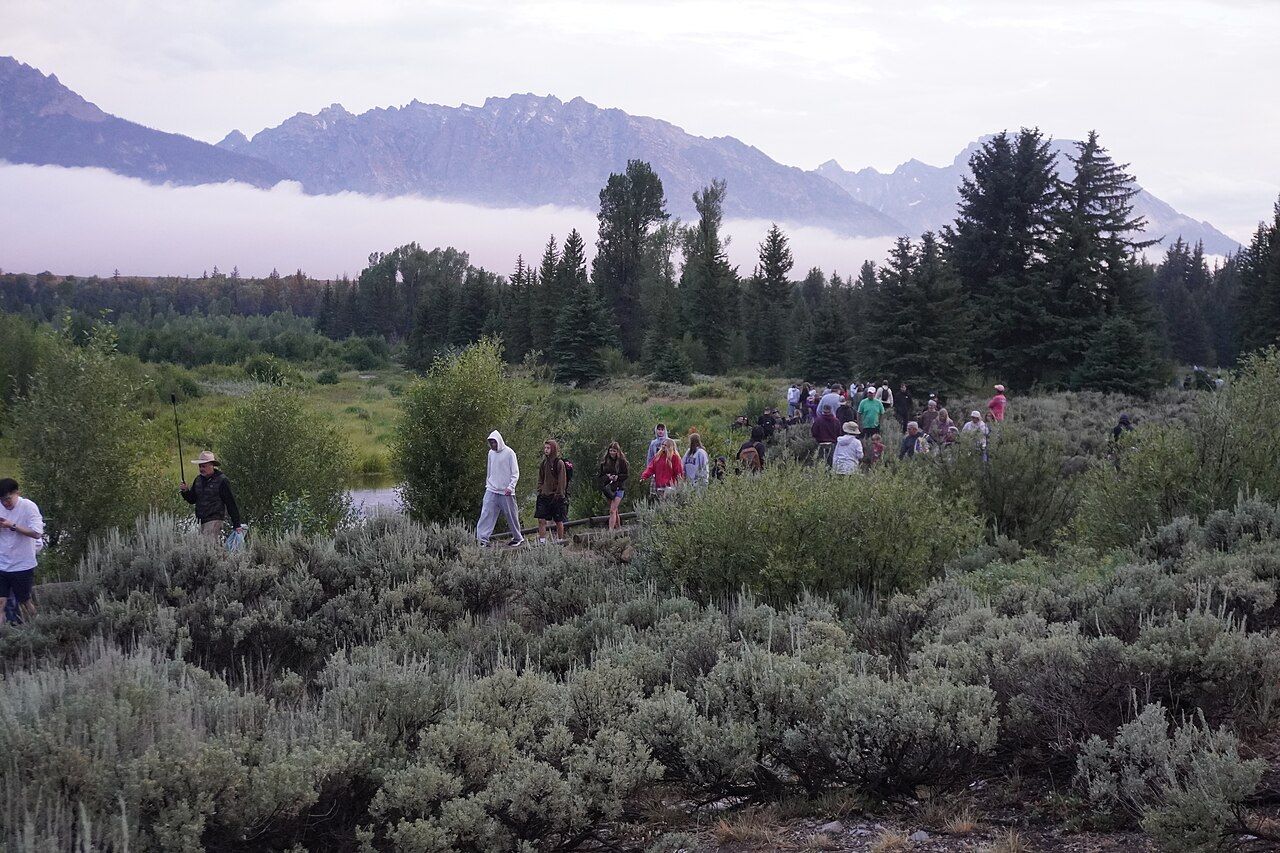
On summer mornings, expect company. The parking area fills before sunrise, and the first ponds can be lined with tripods. Arriving early, setting up quietly and leaving room for others makes the experience better for everyone. If the first pond is crowded, walk on: the light is the same a little further up.
Next frameOxbow Bend and Mount MoranAutumn is the strongest season. In late September and early October, the cottonwoods and willows along the channel turn yellow and orange, frost coats the grasses and mist often lifts off the water. Our guide to light and seasons in the valley covers the timing of the colour change in more detail.
Moose, beavers and other residents
The willows and ponds here are good moose habitat, and it is not unusual to find one feeding near the path at dawn or dusk. Moose can be unpredictable and aggressive, especially cows with calves and bulls in the autumn rut. Stay at least 25 yards away, and give them much more room if they show signs of stress: ears laid back, hair raised along the shoulders, licking lips. Our page on moose in the willows describes the warning signs.
Beavers are mostly active at dawn and dusk. Watch for V-shaped ripples crossing the ponds or the slap of a tail on the water. You may also see ducks, great blue herons and the occasional river otter. Never feed any animal, and never use calls or bait to bring wildlife closer.
Photographing the ponds
A wide lens is the usual choice for the classic reflection, with the peaks in the top half of the frame and their mirror image below. Try placing the horizon at the middle for symmetry, or shift it up slightly if the water is especially good.
- A polarizing filter can change the reflection a great deal. Turn it slowly and watch; at some angles it removes the reflection entirely.
- Use a tripod. Early light is dim and you will want a low ISO for clean shadows.
- Bracket exposures. The bright peaks and dark willows can exceed what one frame holds.
- Try a longer lens to pick out a single peak and its reflection, or a beaver lodge against the range.
When the water does not cooperate, turn the camera to other subjects. Mist drifting through the conifers, frost on the willows, or the play of light on the peaks are all worth a frame. Low clouds and rainbows after summer storms can make strong pictures, as the image at the top of this page shows.
Combining it with other stops
Schwabacher fits well into a sunrise loop. Many photographers start here and then drive north to the Snake River Overlook or east to Mormon Row once the light has warmed. If you want a different reflection, Oxbow Bend offers a broad, slow river under Mount Moran, and it is often still calm later in the morning.
Whatever your plan, the park's rules apply everywhere: stay on paths, give wildlife space, no drones and pack out what you bring in. Conditions, access and closures change, so confirm it with the park's current notices first.