
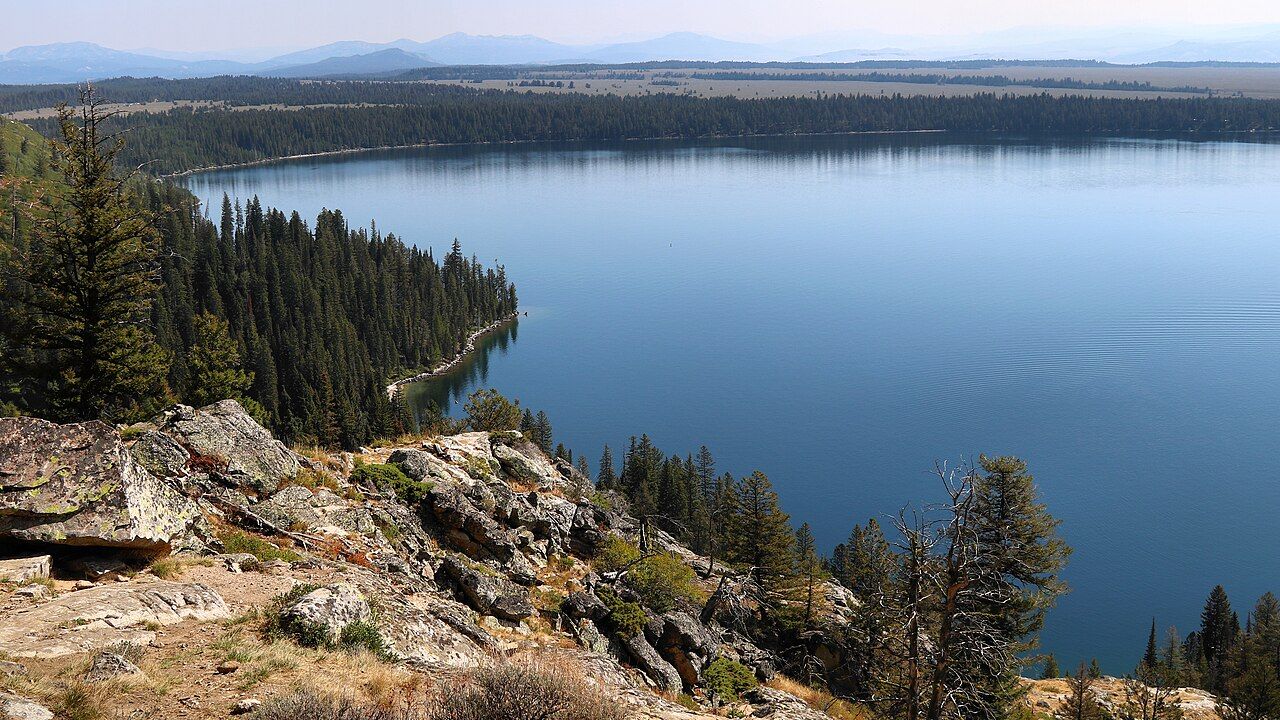
Jenny Lake lies right at the base of the Teton Range, where Cascade Canyon opens onto the valley floor. Glaciers flowing out of that canyon scooped the basin and piled up the moraine that now holds the water in, which is why the lake sits so close under the peaks. From the eastern shore, the Grand Teton, Mount Owen and Teewinot rise steeply above the western bank. It is one of the busiest places in Grand Teton National Park, and for good reason: within a short distance you get a clear mountain lake, a waterfall and a rocky viewpoint with the whole valley spread out below.
The lake and its shores
The main visitor area is on the southeast shore, reached from the Teton Park Road. From there, paved and dirt paths lead to the water's edge, where the classic view looks west across the lake to the peaks. Mornings are usually calmest, and the low sun from the east lights the faces of the mountains directly.
A loop trail circles the whole lake, and the walk around it is long enough to fill a good part of the day, roughly seven miles in all. Shorter sections along the eastern and southern shores give you changing views of the peaks and plenty of chances to use rocks, logs or the shoreline as foreground.
North of the main area, a one-way scenic drive runs along the eastern side of the lake, with pullouts above the water. Nearby String Lake, shallow and sheltered, is another good spot for reflections and for quieter morning paddles.
Crossing the lake
In the warmer months, a boat shuttle crosses from the eastern shore to a dock on the western side, cutting out most of the walk around the lake. Schedules, operating dates and fares change from year to year, and lines can be long at midday in summer. If you walk instead, the trail along the south shore is a pleasant hike in its own right.
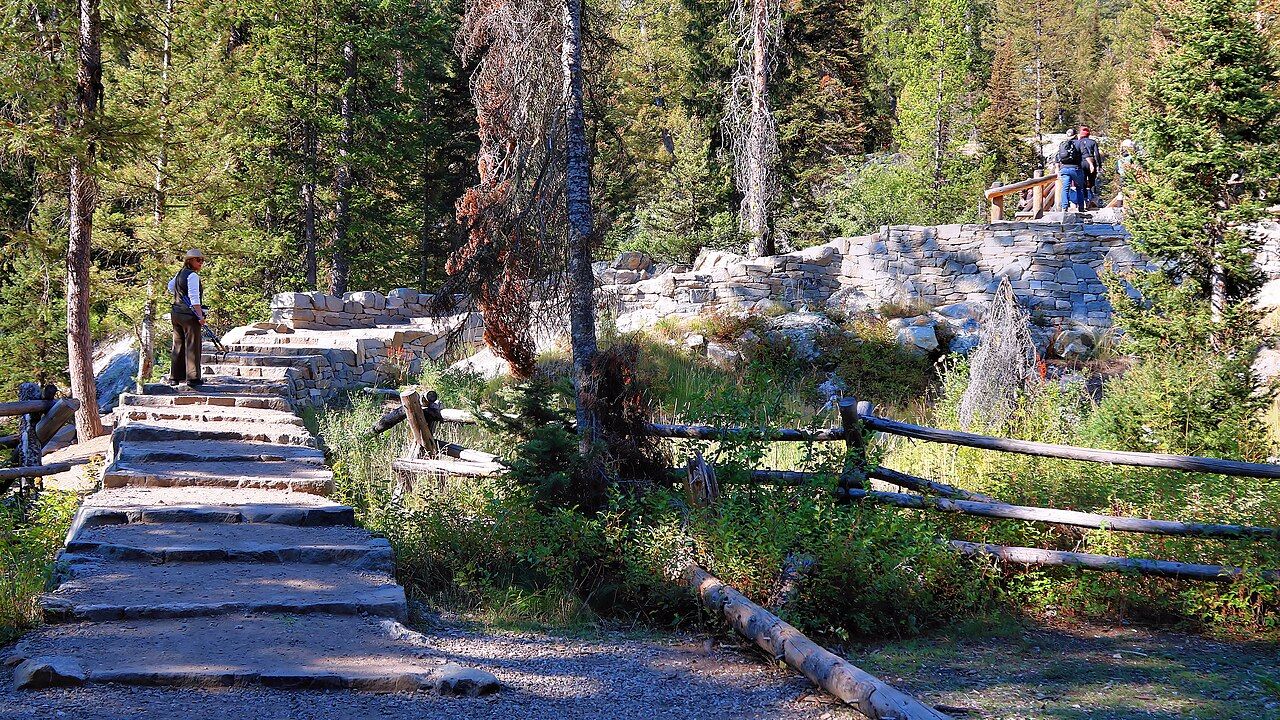
From the west boat dock, the trail climbs into Cascade Canyon. The path is well built, with stone steps and rails in the steeper sections, but it is still a real climb, and you should carry water and wear proper shoes.
frame info
Larry D. Moore · CC BY 4.0Hidden Falls
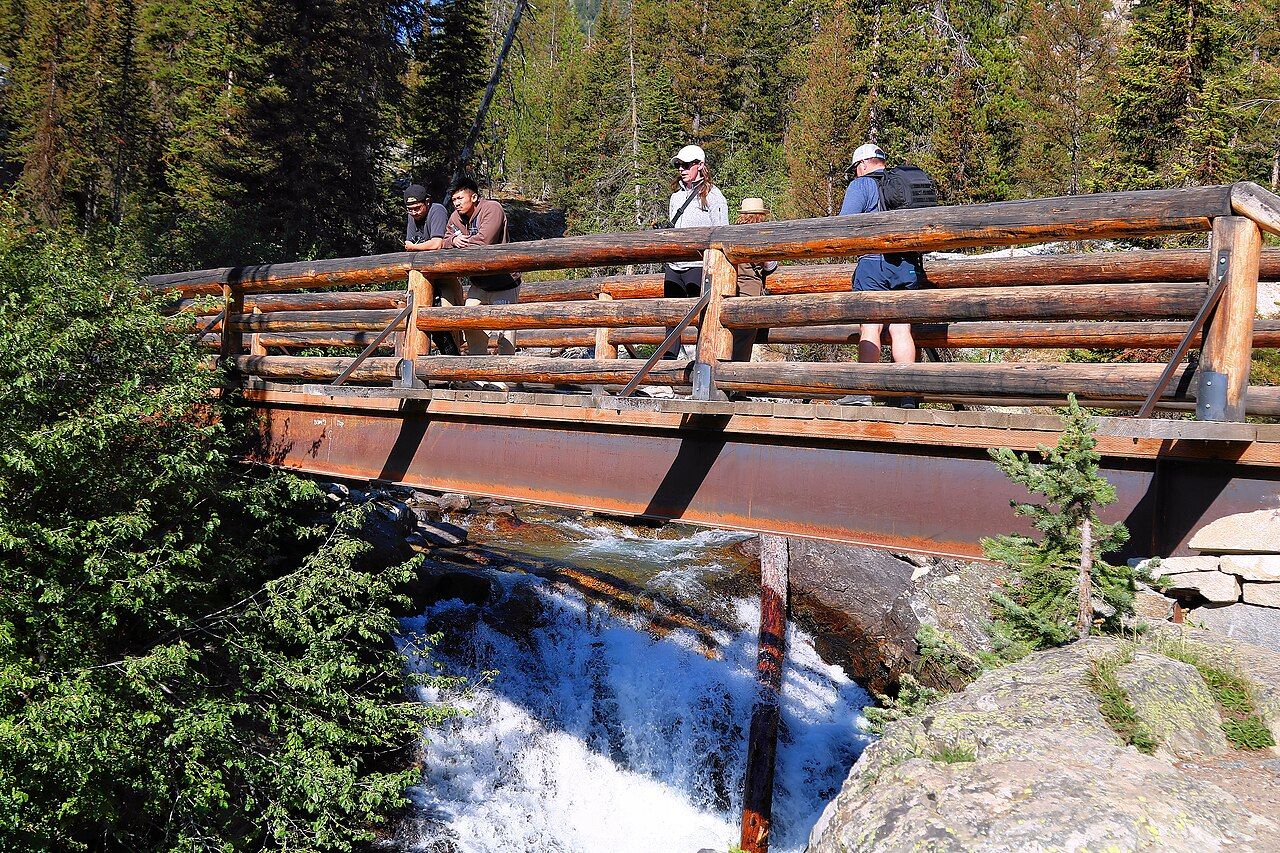
A short distance up the trail from the dock, Cascade Creek tumbles down a steep, rocky gully in a long series of drops. Hidden Falls earns its name: it is tucked into the trees and not visible from the lake. The viewing area is shaded for much of the day, which makes it a good place to photograph on bright afternoons when the open landscape looks harsh.
- A slower shutter speed softens the falling water. Brace the camera on a rail or use a small tripod if the crowd allows.
- Look for details: wet rock, moss and fallen logs often make better frames than the whole fall.
- The spray can be heavy in early summer when snowmelt swells the creek. Keep a cloth to wipe your lens.
frame info
Larry D. Moore · CC BY 4.0Inspiration Point
Beyond Hidden Falls, the trail climbs further to Inspiration Point, a rocky outcrop high above the lake. The view looks east, over the full length of Jenny Lake to the moraine, the sagebrush flats and the hills on the far side of the valley. In the morning you are looking toward the sun, so the scene can be hazy and backlit; later in the day the light swings behind you and the lake turns a deeper blue, as in the picture at the top of this page.
The last stretch is steep and rocky, with drop-offs. Watch your footing, keep children close and stay behind any barriers. In late summer, smoke from distant fires can soften the far side of the valley, which our guide to light and seasons discusses.
Crowds and timing
Jenny Lake is busy from late morning through the afternoon in summer, and parking can fill early. The simplest way to avoid the worst of it is to arrive soon after sunrise. You get the calmest water, the best light on the peaks and a quieter trail.
- Weekdays are generally quieter than weekends.
- Afternoon thunderstorms are common in summer. Watch the sky and come down from exposed points if lightning threatens.
- In early summer, snow may linger on shaded parts of the trail.
- Seasonal closures and trail work can change access. The park's own current notices are the place to confirm it.
Bears and other wildlife
This is bear country. Black bears are often seen around the lake and in the canyon, and grizzlies use the wider area too. Carry bear spray and know how to use it, make noise on the trail and never leave food unattended. Park rules require you to stay at least 100 yards from bears and at least 25 yards from other animals, such as moose and deer. Our page on grizzly and black bears explains how to tell them apart and what to do in an encounter.
You may also see mule deer, pikas and marmots in the rocks near Inspiration Point, and moose in the wetlands near String Lake. Never feed any wildlife, including the bold ground squirrels and chipmunks that beg along the trail. Feeding them harms the animals and is against park rules. For more on behaviour around animals, see wildlife photography ethics.
After the hike, the drive north along the park road leads to more viewpoints, including the summit of Signal Mountain.